Teaching period: 30 July – 9 August 2026
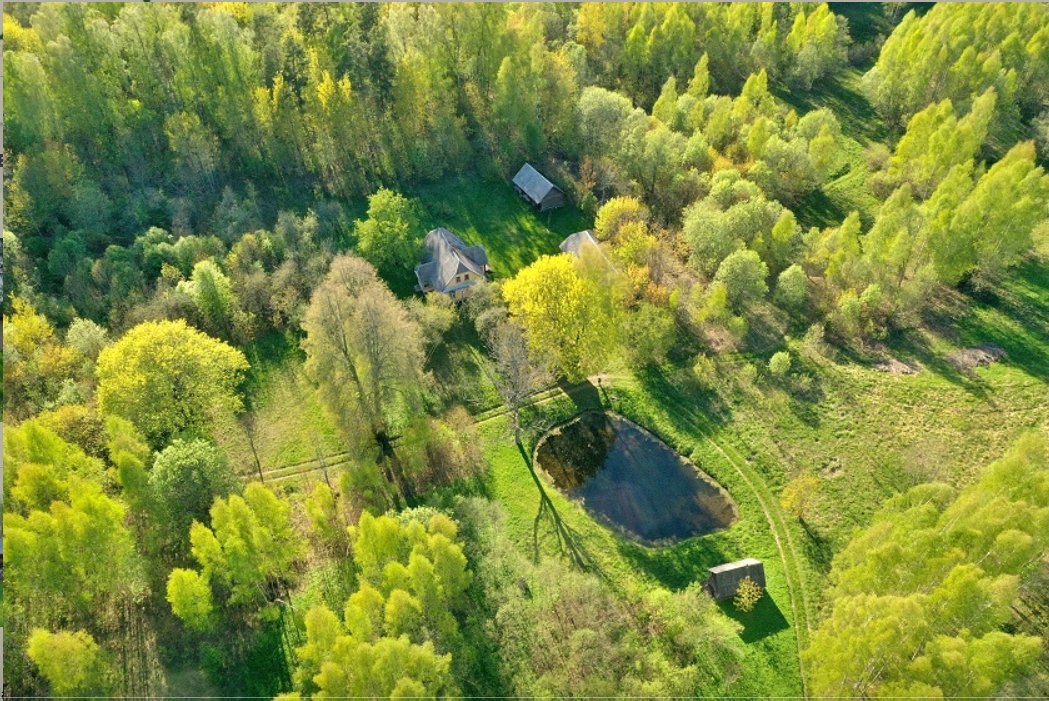
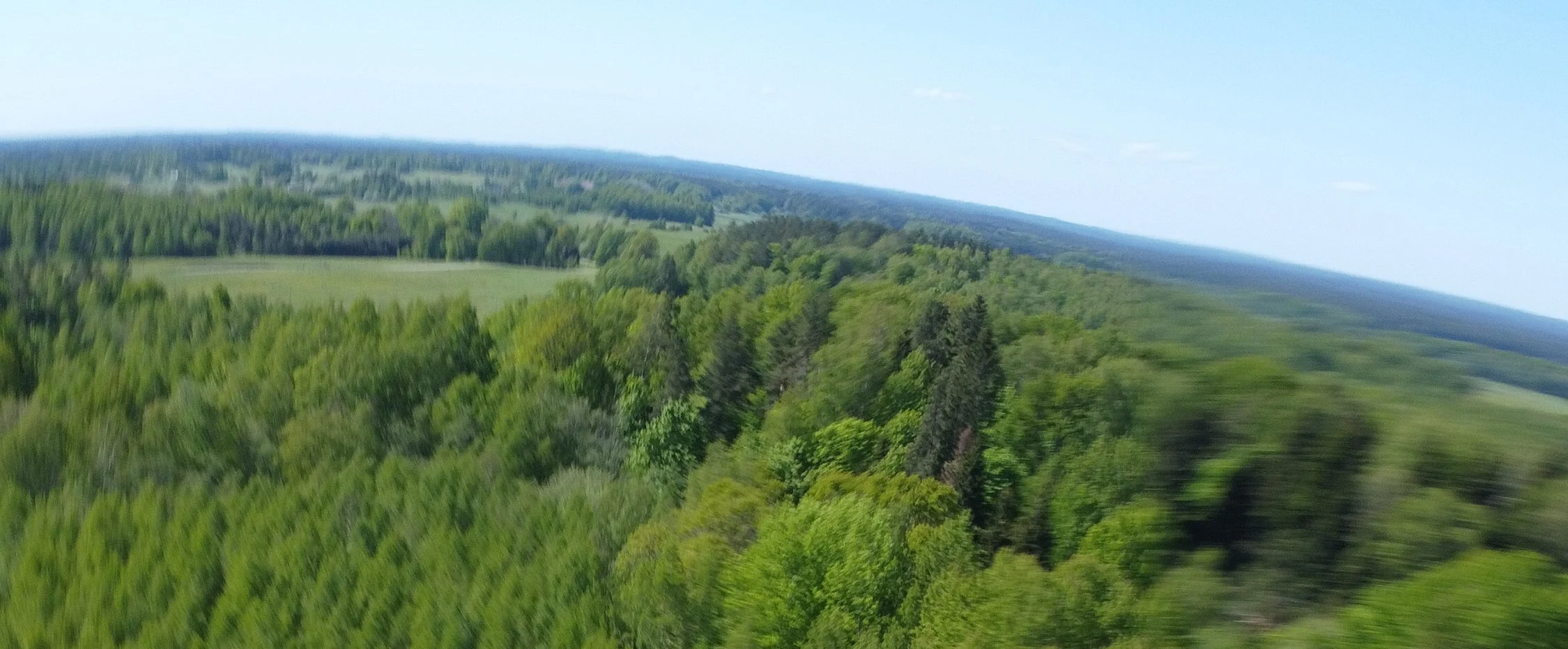
Location: Pratkūnai Geomorphological Nature Reserve, Lithuania
Host institution: Vilnius Academy of Arts
ECTS: 5 ECTS
Number of available places for KUNO students: approx. 15 (MA priority; final-year BA considered)
Level: MA (final-year BA students will be considered)
Application deadline:
Please apply by March 29th; we hope to make the selection by April 10th, 2026.
How to apply:
Apply via the online form:
https://forms.gle/U8rikX7qGezrsmr56
Financial support: Travel costs, catering and accommodation will be covered by KUNO.
Who can apply:
The course is an opportunity for students pursuing master’s degrees in fine and craft arts, as well as media art. BA students can also apply if they will be enrolled in an MA programme by the time of the course. Students from the 3 partner universities have some reserved spots, but we also accept full-time students (Erasmus+ students are not eligible) from other Nordic-Baltic schools (check the list in the form). We expect a group of appx 15 students.
Intensive course description:
Somewhere in the psyche of many artists, there is a fantasy of remove, of a place to escape to, somewhere ‘off-grid’. This course explores this place called ‘off-grid’ (physically, metaphorically, philosophically) and its relationship to the parallel desire, present in many artists, to spend time in rural and remote places, where society and its accompanying power structures are weaker or even severed.
This two-week KUNO intensive course extends a multi-year collaborative course on site-responsive and place-based artistic practice in remote and rural contexts. The 2026 edition will be held at a wilderness camp* in the Pratkūnai Geomorphological Nature Reserve. You can expect to find slow or intermittent internet connections, to awake to the natural alarm of humming birds songs in a place where you can cook your dinner on an open fire, explore the forest or meet a deer (1 out of 4 species), and encounter a smoke sauna ritual which has stayed untouched almost from the Middle Ages.
For 11 days, living and working together, students and facilitators will exchange ideas and make work exploring the ‘place’ known as ‘off-grid’, as artists-researchers-villagers. It might sound like a happy and worry-free hippy camp, though it is not. While the concept of being off-grid will be explored broadly, this investigation is also rooted in an attempt to imagine and practice what the life and work of the artist might become in a geopolitical and/or climate crisis. All these crises will look less terrifying and make us less anxious when we are better prepared to use traditional knowledge and practices from our ancestors, as well as communal relationships, and adapt them to our contemporary needs as artists. Alternative and hybrid rationalities come into action.
Group exercises, collective meals, shared and individual work time as well as presentations of participants' past work are core components of the course. The course is an opportunity for students pursuing master’s degrees in fine and craft art to meet and engage in thematic, site-responsive exploration and making.
Facilities
Location is ~2 hours drive from Vilnius airport (or 1:30h train to Ignalina and 30 min drive; no direct public transport to the site, but we will organize shared rides by car)
a deep (85 m) drinking water well with some hot water for showers and the kitchen
a few indoor flush toilets, and showers
a composting toilet
a few refrigerators and dishwashers
a few gas and electric stoves
There are enough beds with linen inside the houses (unless you want to stay overnight in the tent, so you should consider bringing a sleeping bag)
The site
The course will be hosted in a scattered village (Lit. padrikasis kaimas) where cottages are dispersed in a forest 300-1000 meters from each other, giving some space to think and work. The site has a rustic feeling with a spirit of ecosophy and a commitment to minimizing the use of resources.
Preliminary Programme: The fantasy of being OFF-GRID
Each day has a topic or a scenario. These activities occupy only one part of the day, allowing you course time to develop your own work in relation to the site and theme.
Day 0 Travel day, including pre-assignment.
Day 1: Settling in
How to settle responsibly in a non-touristic rural location?
What can an artist do in a rural, remote post-farm?
Time planning, preparing the site and settling yourself comfortably/uncomfortably in.
Mapping the space and relations, short presentations of each other's practices.
Collective walk to get to know each other and the surroundings.
Sharing things between neighbours and getting to know them.
Foraging for food with the help of artist-chef Kipras Dubauskas.
Day 2: How to be and survive off-grid?
The fantasy of being ‘off-grid’: from practice to theory; from nature to politics.
How to practice and theorize the concept of being off grid?
Energy off-grid vs. geopolitical off-grid vs. out of the network grid vs. out of the digital (social media) flows.
What is the physical and mental grid and infrastructure supporting it?
Instructor neighbour (kaimynas) Dimitrey Rouwhorst will demonstrate the local wildlife (animals, birds, insects, plants, and trees) and strategies of survival. How to start a fire in the wild without matches.
* Introduction to fire, types of fire and fire applications; 15 - 20 minutes. * Tinder; 15-30 minutes * Firewood; 15-30 minutes * Making fire; 1-2 hours * Leave no trace! Cleaning up together, making sure nature is the same way as when you got to the place. Around 20-30 minutes. In total, we will work for 4 hours.
What is Social and political off-grid? How to be autonomous both in thinking and living?
The concept of a "sovereign", “philosophical solitary” (Thoreau Walden), “hermit”, loner (Simona Kossak stayed 30 years in Dziedzinka in Białowieża Forest).
Day 3: Soviet occupation and resistance to it: industrialization and construction of the landscape
Desettling by (political) force.
Lithuania was occupied by the Soviet Union 1940 to 1990 (in between German occupation 1941–1944). Lithuania was independent from 1253, and from 1569 it was in the Union with Poland, until 1795, when it was taken by the Russian Empire. Lithuania was again independent 1918–1940. Right after the Second World War, villagers were brought by force from individual farms to collective villages where they “shared tools and land”.
Our methods include: travelling in modernized landscapes and discovering ruins of collective farms as well as heritage from XIX century farmhouse living.
Raising questions: What is the connection of these micro-stories to the former USSR history and all the occupied states? What is the connection between USSR and Finland, Sweden and other Nordic and Baltic countries?
Day 4: Free day to work and relax
Day 5: Thinking about neighbourhood (kaimynystė) in a village (kaimas): locals vs. summer holiday makers (new homesteaders)
a. Making Public Space – how do you make a public space where there are no traces of it besides going to church and small chats after it
b. Establish a temporary public space in a wilderness
c. Locals and settlers. Visiting an old wooden mill reconstructed by the son of the miller into a photography and event space
d. Beyond humans and their rights: what is the agency of trees, mushrooms and wildlife?
Meeting with a neighbour lawyer and a wildlife activist. Check his vlog “Forest seasons”:
https://www.facebook.com/profile.php?id=100079668780758
or
https://kasvykstamiske.blogspot.com (not updated since 2023)
Day 6: Practising neighbourhood and communality
a. How did people bathe from the Middle Ages until the invention of the shower?
Preparing a smoke sauna, whisk (tree branches), herbal teas and bathing ritual (8–9 hours in total).
b. Foraging for herbal teas (alternative to sauna), cooking together and reflecting.
Day 7: Basic woodworking
Having a woodworking tool for the first time in your life? What can you do with it? Having some skills? How do you build a table, chair or a hut?
Day 8: Free day to work on your projects/proposals/models and sum up
Day 9: Getting together to present and reflect
Day 10: Departure day, cleaning up and saying goodbye to the site and peers
Day 11: Postassignement
Living conditions
Students will stay in shared bedrooms (2–5 persons in a room).
There are two showers, but they will be available more as an exception than an everyday habit.
You can wash in the pond and sauna as our ancestors did.
There are also a few WC (Water closets) and an outhouse (compostable toilet).
There are facilities to cook and make tea, and a few coffee machines.
There are also a few refrigerators and dishwashers to keep dining worry-free.
There are a few options for private accommodation if you need a night (or several nights) to yourself: the attic above the sauna, or pitching a tent or a hammock in the garden (orchard) or forest.
The closest basic grocery shop is 8 km / 10 min drive; bigger grocery stores are 25–30 min drive.
Most of the meals will be prepared by chefs and neighbors but we also expect you to contribute to the cooking. You can indicate your dietary restrictions on the application form.
Course components
Activities and methods include:
guided tours and independent exploration of the site, introduction to industrial forestry, local crafts and various constituencies in the community
a series of collective exercises initiated by each of the facilitating artist teachers
collective meals
previous work presentations by each participant
time for project development
a final project accompanied by a work-in-progress presentation
Among the methods explored, some that are specific to the rural will be highlighted, including: walking, orientation, foraging, forest bathing (shinrin-yoku), sited research, “indigenous” knowledges, daily rituals and working together (talka).
Course history
Artist work in the post-rural context builds on the history of the four-year KUNO intensive course Rural Contextual Practice (2022–2025). With this new edition (2025–2028), we bring our focus more explicitly to a questioning of ‘the rural’ as a categorical place, inviting artists to develop ways of working beyond rural/urban binaries.
This transdisciplinary course explores contextually responsive art practice with a specific focus on ‘the rural’. The dominance of the urban in artistic discourses and the marginalization of the rural as an often invisible space of industrial production and resource extraction combine to form a strong argument for focusing our attention, within master-level art and craft education, on developing our conceptions of the rural and rural publics and our capacity to make complex works within and about rural contexts.
Facilitators
Daniel Peltz
Professor of Site and Situation Specific Practice, Department of Time and Space Arts
Academy of Fine Arts, Helsinki, Finland
Dr. Vytautas Michelkevičius
Professor of Artistic Research and Media Art
Head of Photography and Media Art Department and Head of Doctoral Programme in Fine Art
Vilnius Academy of Arts, Lithuania
Sissi Westerberg
Senior Lecturer, Department of Craft, Smycke & Corpus: Ädellab
Konstfack University College of Arts Crafts and Design, Stockholm, Sweden
David Larsson
Senior Lecturer, Department of Fine Arts
Konstfack University of Arts, Crafts and Design, Stockholm, Sweden
Guest tutors
Curator Vilius Vaitiekūnas, founder of Akee space https://akee.lt/en/pradinis-english/
Villagers
TBC more
Reading list
Highly recommended:
Promiscuous Infrastructures: Practicing Care
Edited by Michelle Teran, Marc Herbst, Vivian Sky Rehberg, Renée Turner and The Promiscuous Care Study Group.
Full text PDF: File: Promiscuous Infrastructures Practicing Care 2024.pdf - Monoskope_2024.pdf
The Serviceberry: Abundance and Reciprocity in the Natural World — Robin Wall Kimmerer
Podcast version: https://emergencemagazine.org/essay/the-serviceberry/
with a Bird, | Onomatopee — explores birds as transgressors, inspiring humans in both scientific and spiritual understandings of life.
A Tree, | Onomatopee
Recommended for browsing now and then:
Rebecca Smith — Rural: The lives of the working class countryside (2023, Williams Collins Books)
https://www.bbc.com/travel/article/20240516-estonias-naked-smoke-sauna-tradition-to-cleanse-body-and-soul
https://www.amazon.com/Rurality-Re-Imagined-Villagers-Farmers-Wanderers/dp/1940743346
https://seasonalneighbours.com/Book
https://www.dezeen.com/2023/05/17/finnish-pavilion-venice-architecture-biennale-toilet/
Optional:
Robertas Verba documentary film Paskutinė vienkiemio vasara (1971)
https://www.dailymotion.com/video/xkj9mi
Contact: prof. dr. Vytautas Michelkevičius vytautas.michelkevicius@vda.lt