Teaching period: June 20-27, 2026
Location: Vilnius Academy of Arts, Panemunė Castle, Lithuania
Teacher(s): assoc. prof. dr. Marius Daraškevičius, architect (Vilnius Academy of Arts), honorary prof. dr. Fritz Barth, architect BDA (Bauhaus-Universität Weimar), Friedrich Barth, M.Sc. Architect (Barth & Barth).
ECTS: 3
Number of available places for KUNO students: 10
Level: BA /MA
Requirements: students from Sculpture, Scenography, Sight-specific Art/Monumental Art, and Painting study programmes are invited to join.
Application deadline: 1st of April, 2026.
How to apply: Please send your motivation letter and portfolio (the main artistic field / artistic research, maximum 12 slides, *pdf) to aida.kirkickiene@vda.lt
Course description
It is a multidisciplinary express course for the KUNO, CIRRUS and NBAA network students.
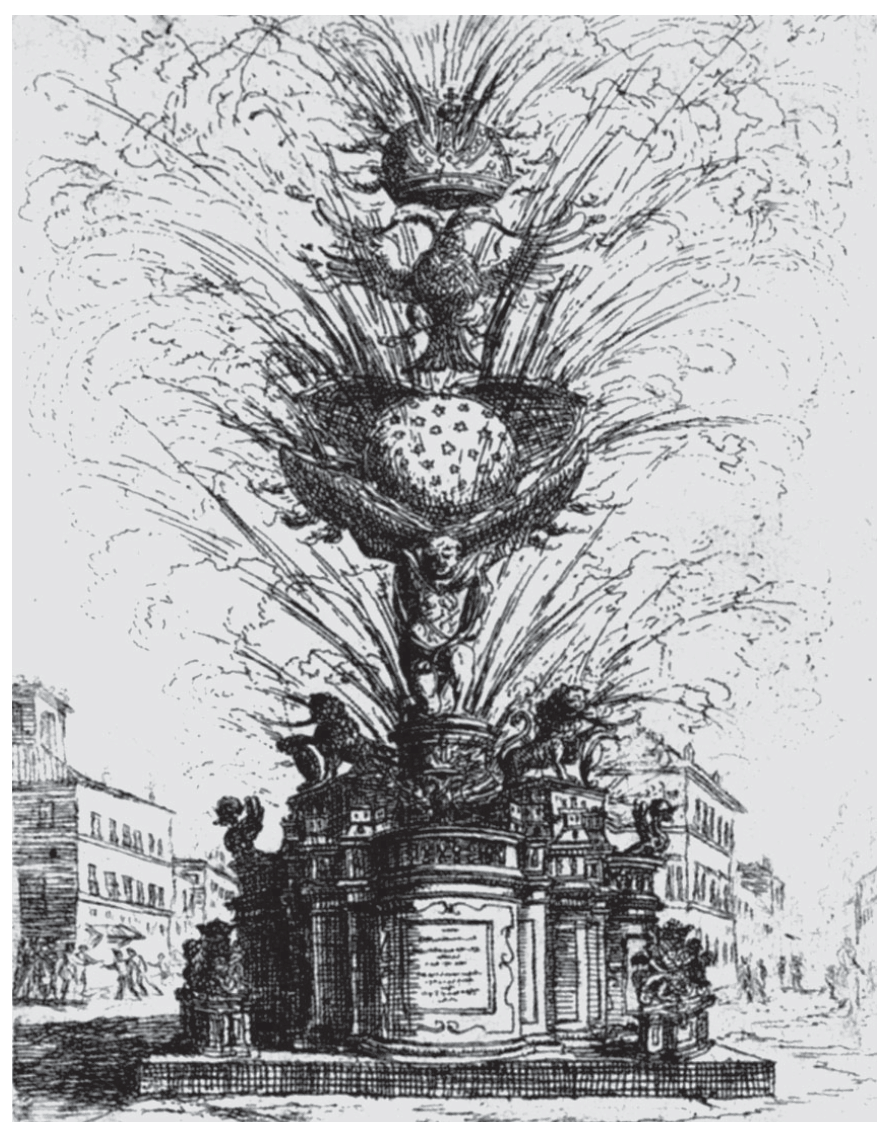
We invite applications for the KUNO Network (KUNO), CIRRUS and Nordic Baltic Academy of Architecture (NBAA) Express Course dedicated to the art and pedagogy of fireworks architecture, an extraordinary and nearly forgotten art form at the intersection of architecture, sculpture, and pyrotechnics. This program offers students in Architecture, Sculpture, Scenography, Sight-specific Art/Monumental Art, Painting and Product Design the rare opportunity to explore the design, construction, and performance of festive, ephemeral structures that come alive through fireworks.
Background. Once celebrated as a highly sophisticated art of the Baroque era, fireworks architecture combined architectural imagination with pyrotechnic spectacle to create unforgettable festive landscapes. From triumphal arches to sculptural stage sets, these works turned gardens, castles, and city squares into temporary theaters of light and fire. Today, as the cultural value of fireworks is questioned and their future uncertain, we see an urgent chance to revisit and reinterpret this unique form. The Baltic Manor Festival 2026, hosted at Panemunė Castle in Lithuania, provides a perfect setting. Its historic landscape garden will become the stage for an architectural fireworks display in the spirit of early modern station theater, where audiences move through a pyrotechnically transformed enchanted garden. The project draws inspiration from the past but is firmly anchored in the present: an exploration of fireworks as a contemporary art form capable of addressing complexity, temporality, and transformation.
Pedagogics. (Pedagogy) The second phase focuses on the full-scale implementation of the previously developed designs. Building on the conceptual and formal strategies established in the first phase, participants will translate their projects into constructed, operational structures. The emphasis shifts to material decisions, construction methods, logistics, budgeting, and safety considerations, particularly in relation to pyrotechnic integration.
Students will work collaboratively to develop detailed construction plans, prototypes, and assembly sequences, engaging directly with real-world constraints and expert input. Close coordination with pyrotechnicians and technical advisors will ensure that architectural structures and fireworks performances function as a coherent system.
This phase highlights the practical challenges of realizing time-based, ephemeral architecture. Participants must plan and execute the structures’ behavior across their three temporal states—before, during, and after the fireworks event—addressing issues of transformation, durability, and controlled decay. Through hands-on construction and iterative testing, the phase strengthens skills in teamwork, project management, and the translation of experimental design into feasible, performative architecture.
The Task. Participants will collaboratively realize three architectural structures, along with a series of smaller, distributed objects, serving as platforms for the fireworks display concluding the Baltic Manor Festival on June 27, 2026. Building on completed design proposals, the focus lies on construction, coordination, and execution at full scale.
All structures must balance aesthetic ambition with technical feasibility, financial constraints, legal requirements, and safety regulations. Each intervention is required to operate in two distinct modes: as a silent, sculptural presence during the daytime, and as an active, integrated component of the nocturnal fireworks choreography.
Through this process, participants will engage with the challenges of implementing ephemeral, time-based architecture, where structural design, pyrotechnics, and performance are inseparably linked.
Schedule. The program unfolds in two phases:
Phase 2 (June 20–27, 2026, Panemunė Castle, Lithuania): Construction and assembly of the designs, culminating in the public fireworks performance on June 27.
Financial support by KUNO:
Travel support between countries: 330 € (except 660 € to/from Iceland)
Subsistence: 250 € per week (5-7 days)
General KUNO Eligibility Rules:
- only BA and MA full-degree students from the KUNO network schools can participate;
- exchange students from other institutions, which do not belong to the KUNO network, studying at one of the KUNO network schools, CANNOT participate;
- full-degree students from the KUNO network schools, currently on exchange at another institution, CANNOT participate (neither with nor without the KUNO grant).
In case of any questions please do not hesitate to contact marius.daraskevicius@vda.lt or aida.kirkickiene@vda.lt